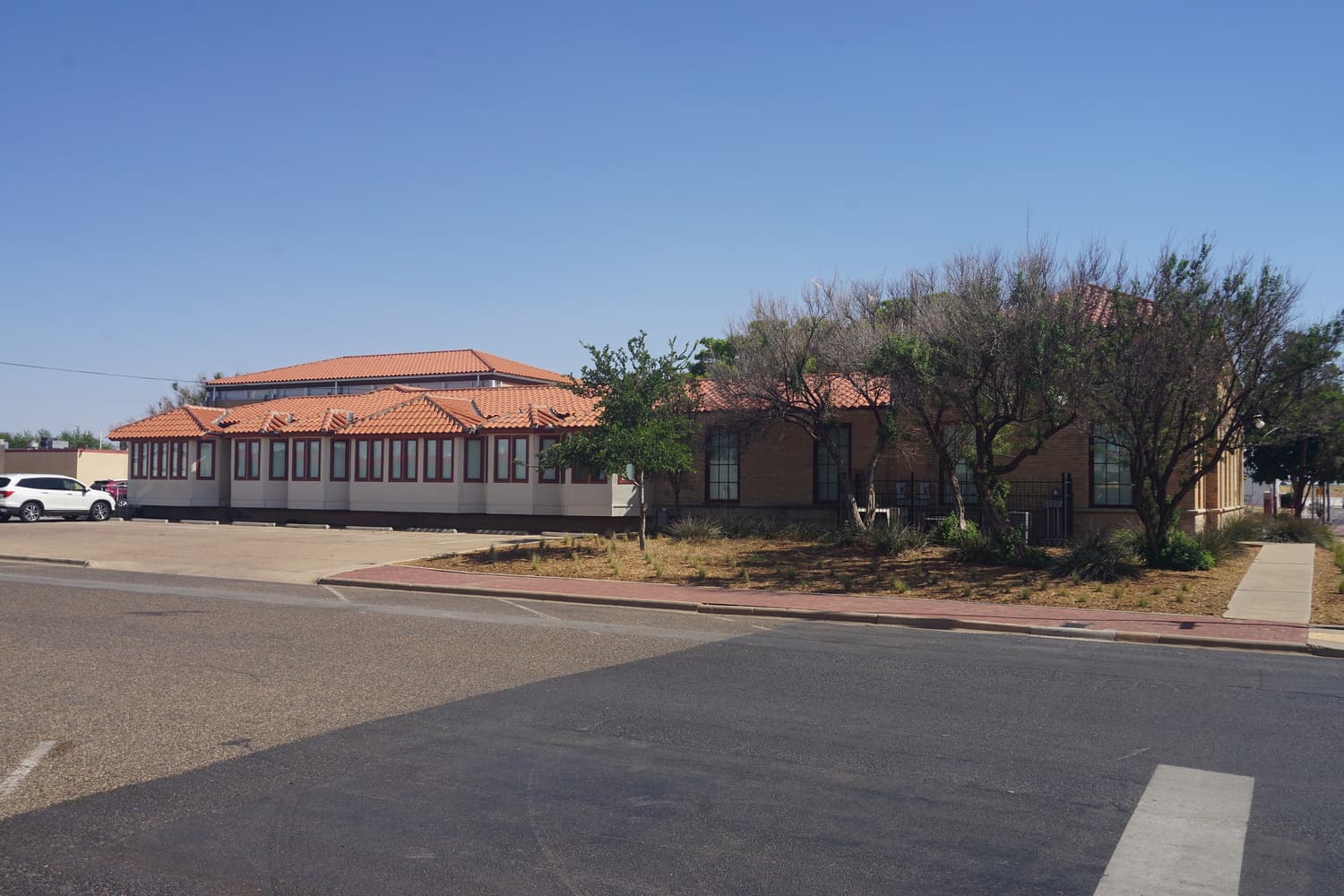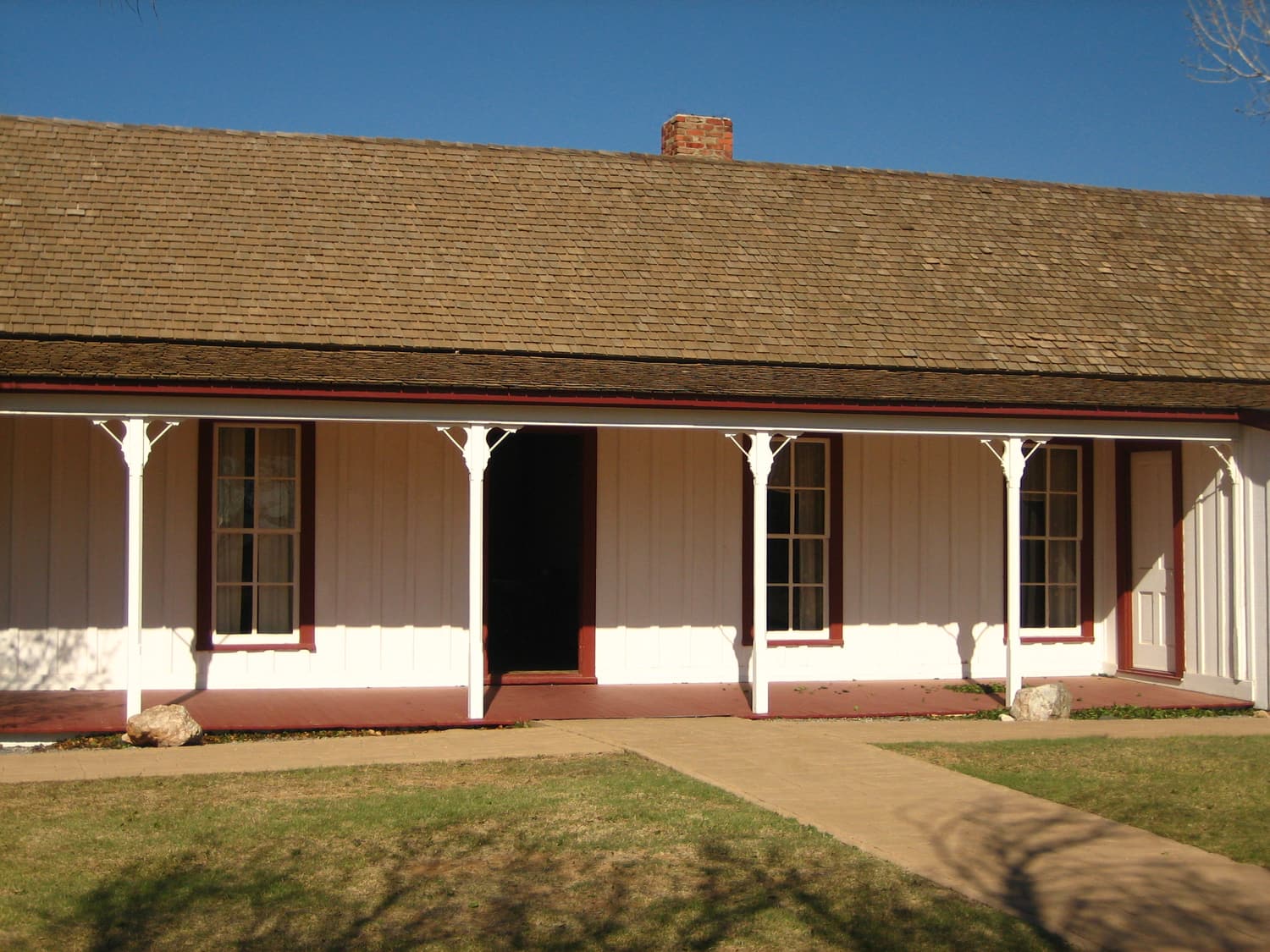
If you only visit one museum in Lubbock, make it this one. The National Ranching Heritage Center, part of the Museum of Texas Tech University, tells the story of ranching in North America through more than 50 authentic buildings, rescued from ranches all over Texas and rebuilt around a landscaped trail on the edge of campus.
Walking the trail is like moving through two centuries of ranch history — from a 1780s Spanish colonial adobe to half-dugouts, stone bunkhouses, a one-room schoolhouse, windmills, a railway depot and grand ranch headquarters. Indoors, galleries hold saddles, spurs, western art and changing exhibitions. It is free, beautifully kept and rarely crowded.
Top things to do: National Ranching Heritage Center
Walk the historic structures trail
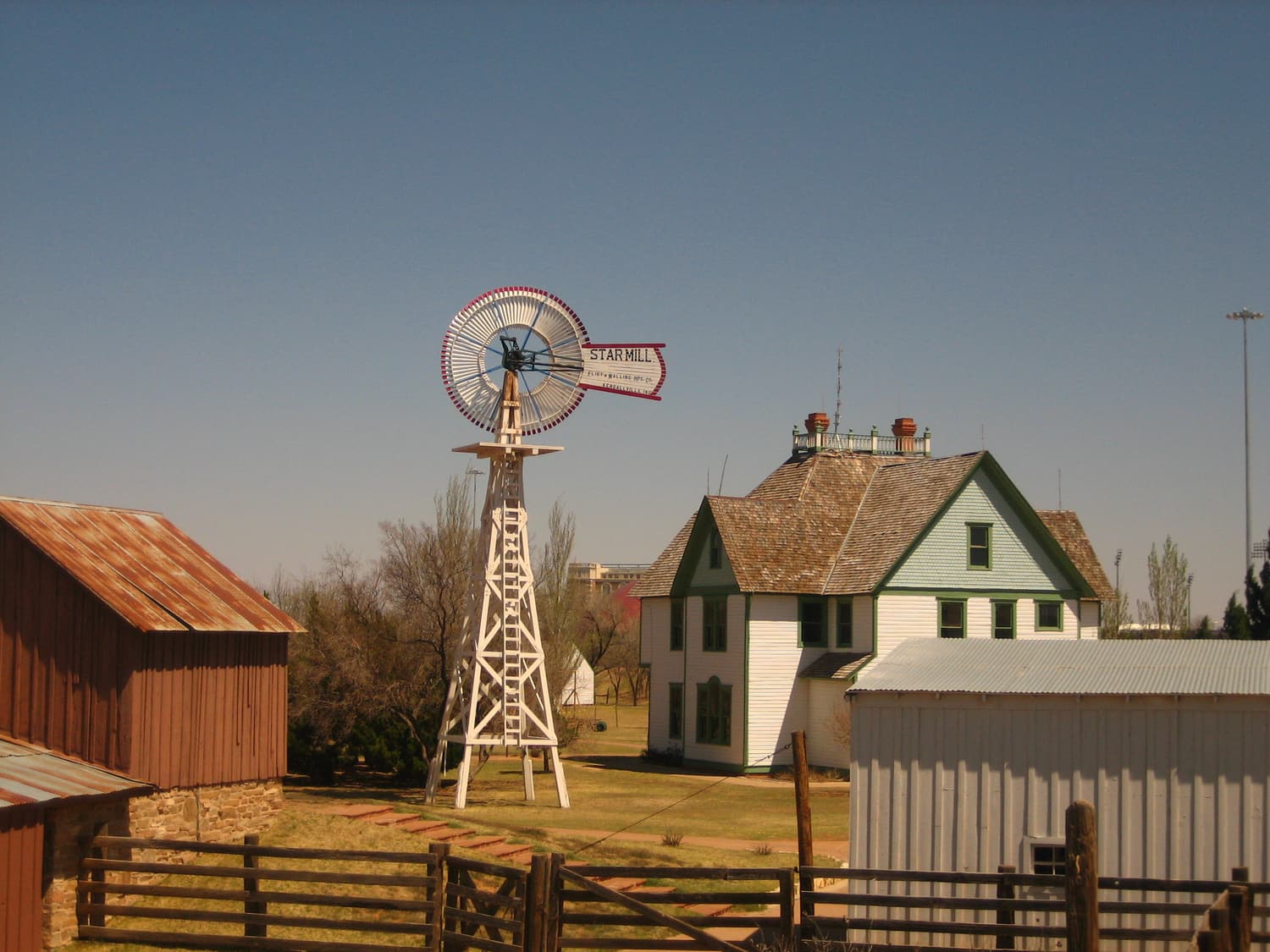
The outdoor Proctor Park trail links the buildings in rough chronological order. Look inside the dugout and half-dugout homes to see how early settlers survived on the treeless plains, then compare them with the comfortable ranch houses built once the railway arrived.
Los Corralitos and the early buildings
The oldest structure, a fortified adobe from the Rio Grande country, dates to the late 1700s and shows how Spanish and Mexican ranching traditions shaped everything that followed — including the vocabulary: rodeo, lariat, corral.
Windmills and the railway depot
Windmills made ranching on the Llano Estacado possible by lifting water from the aquifer; several stand on the grounds. The restored depot and stock pens explain how cattle reached market once the railways came.
Galleries of western art and gear
Indoor galleries show saddles, branding irons, firearms and western art, plus temporary exhibitions. Good if the weather is hot or windy.
Seasonal events
The center’s Ranch Day (usually in spring) brings the buildings to life with demonstrations, and Candle Light at the Ranch (in December) lights the trail with lanterns and costumed interpreters recreating frontier Christmases.
How to get there
- Address: 3121 4th Street, on the northern edge of the Texas Tech campus, next to the Museum of Texas Tech University.
- By car: about 10 minutes from downtown Lubbock; free visitor parking on site.
- Combine: the Museum of Texas Tech University is next door, and the Overton and university-area hotels are a few minutes away.
Insider tips
- Admission is free (donations are appreciated). Hours have typically been Monday–Saturday daytime and Sunday afternoons — check before visiting.
- Allow 1.5–2 hours to walk the whole trail without rushing.
- In summer, go when it opens; there is little shade between buildings. In spring, bring a windbreaker.
- Pair it with a Fort Worth Stockyards tour if you fly in via Dallas–Fort Worth: the Stockyards tours show where the cattle trails ended.
Pair it with a tour
GetYourGuide has no bookable tours in Lubbock itself yet, so these are the best-rated experiences that fit naturally into a trip that includes National Ranching Heritage Center:
 Small-group tour from $36
 Fort Worth: Guided Tour from Dallas or Fort Worth
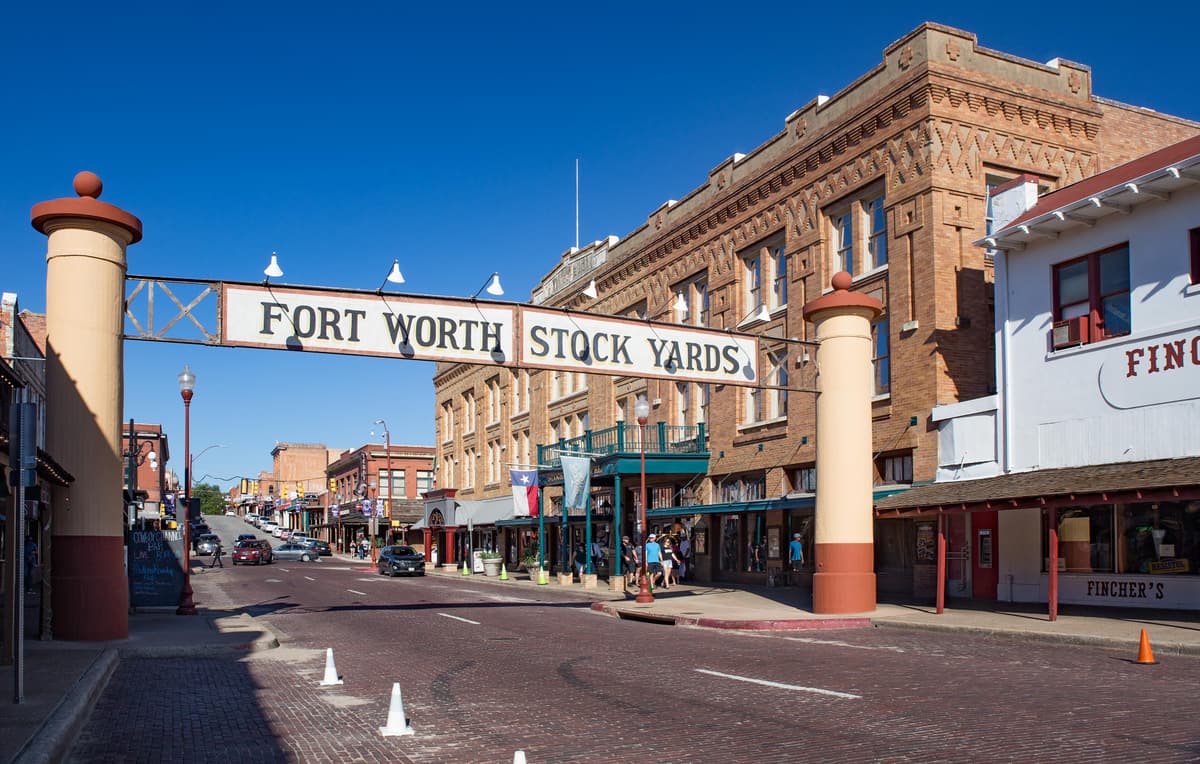
The best-reviewed way to see “Cowtown” without driving in DFW traffic. The tour takes you to the Fort Worth Stockyards and the Cattle Drive visitor centre, with a guide explaining how the cattle trade built the city — a good warm-up before the long drive west to Lubbock and the ranching country of the Llano Estacado.
- The historic Stockyards and the longhorn cattle drive
- Cowboy history of “Hell’s Half Acre”
- Transport from Dallas or Fort Worth included
 Walking tour from $45
 Fort Worth: Stockyards History Tour Pub Crawl
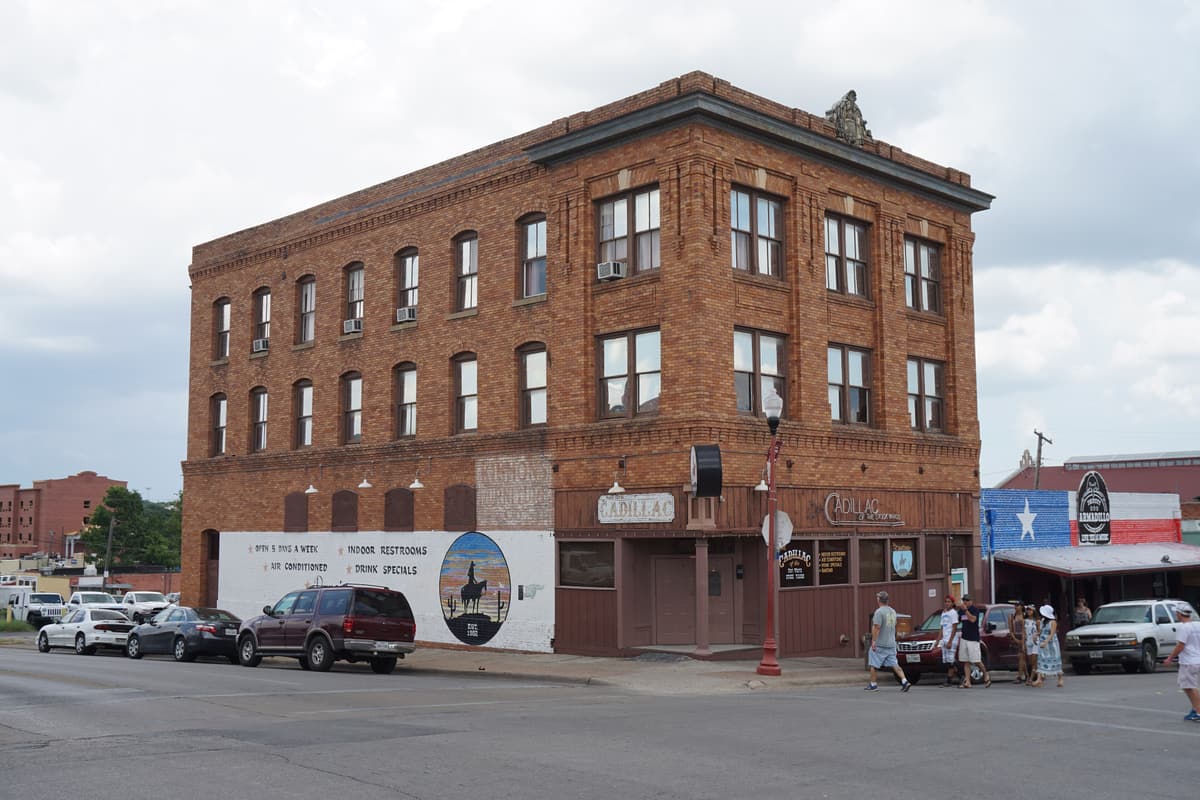
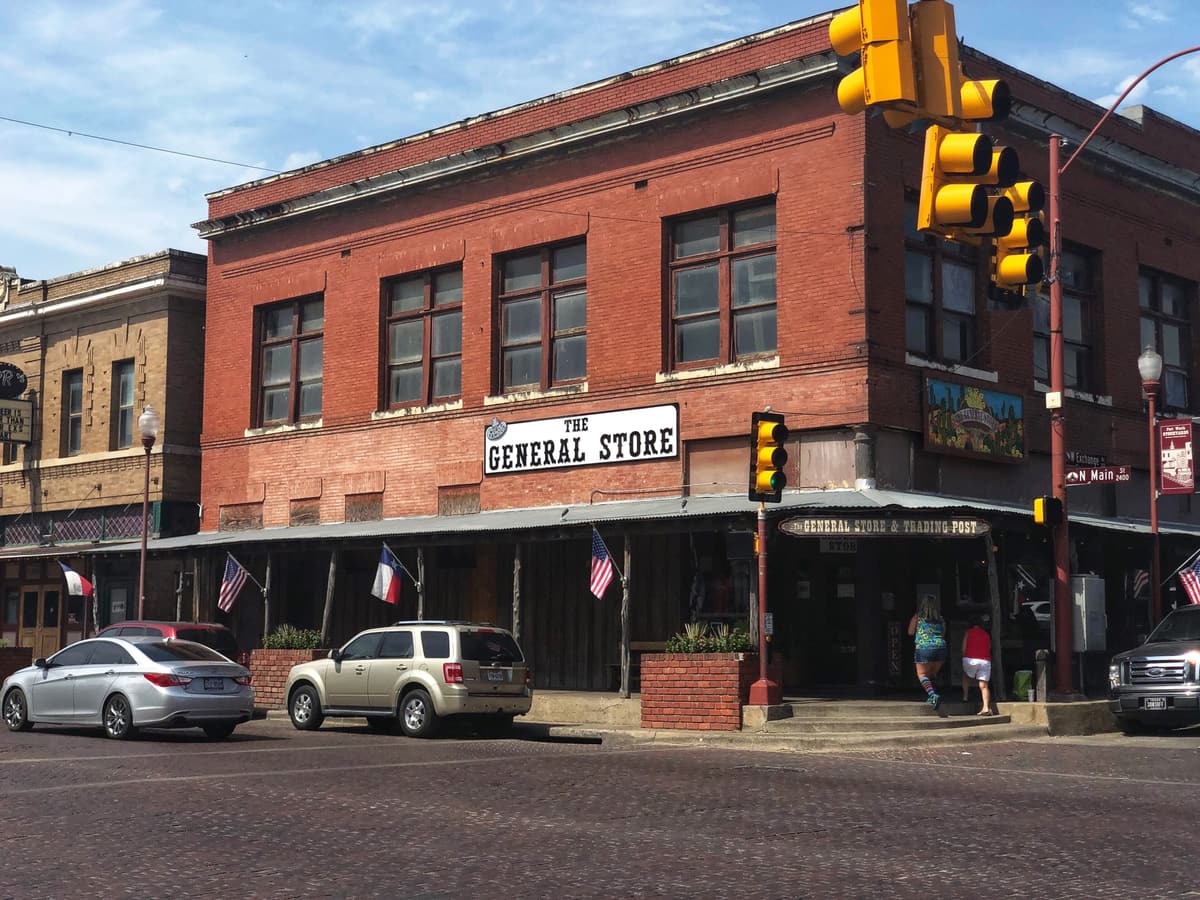
Most international visitors reach the South Plains through Dallas/Fort Worth, and the Stockyards are the perfect prelude: this is where the cattle trails ended. A local historian leads you between old saloons on Exchange Avenue, mixing cattle-drive history, outlaws and cowboy culture with cold drinks — the same ranching story you will meet again at Lubbock’s National Ranching Heritage Center.
- Hidden history of the cattle drives and cowtown saloons
- Several classic Stockyards bars with an expert guide
- Top-rated by guests (4.9/5)
 Food tour from $115
 Fort Worth: Stockyards Saloons and Foodie Crawl Tour
Eat your way through Texas cowboy country before you head out to the real thing. This guided walking tour of the Fort Worth Stockyards pairs three savoury tastings and a sweet finish with the history of cattle drives and outlaws — a fun first taste of the Texas food you will find all across the South Plains.
- Three food stops plus a dessert treat
- Stories of cowboys, cattle drives and outlaws
- A walk through the historic Stockyards district